F1 2025 Data Collector
These guides cover the v6 F1 2025 collector: one Go service, up to four independent rigs, and delivery to Splunk Enterprise/Cloud through HECSplunk's HTTP endpoint for receiving event data. The collector uses a HEC URL and token to send full telemetry to Splunk Enterprise or Splunk Cloud., Splunk Observability Cloud, or both. v6 is undergoing production field testing; verify your deployment before guests arrive.
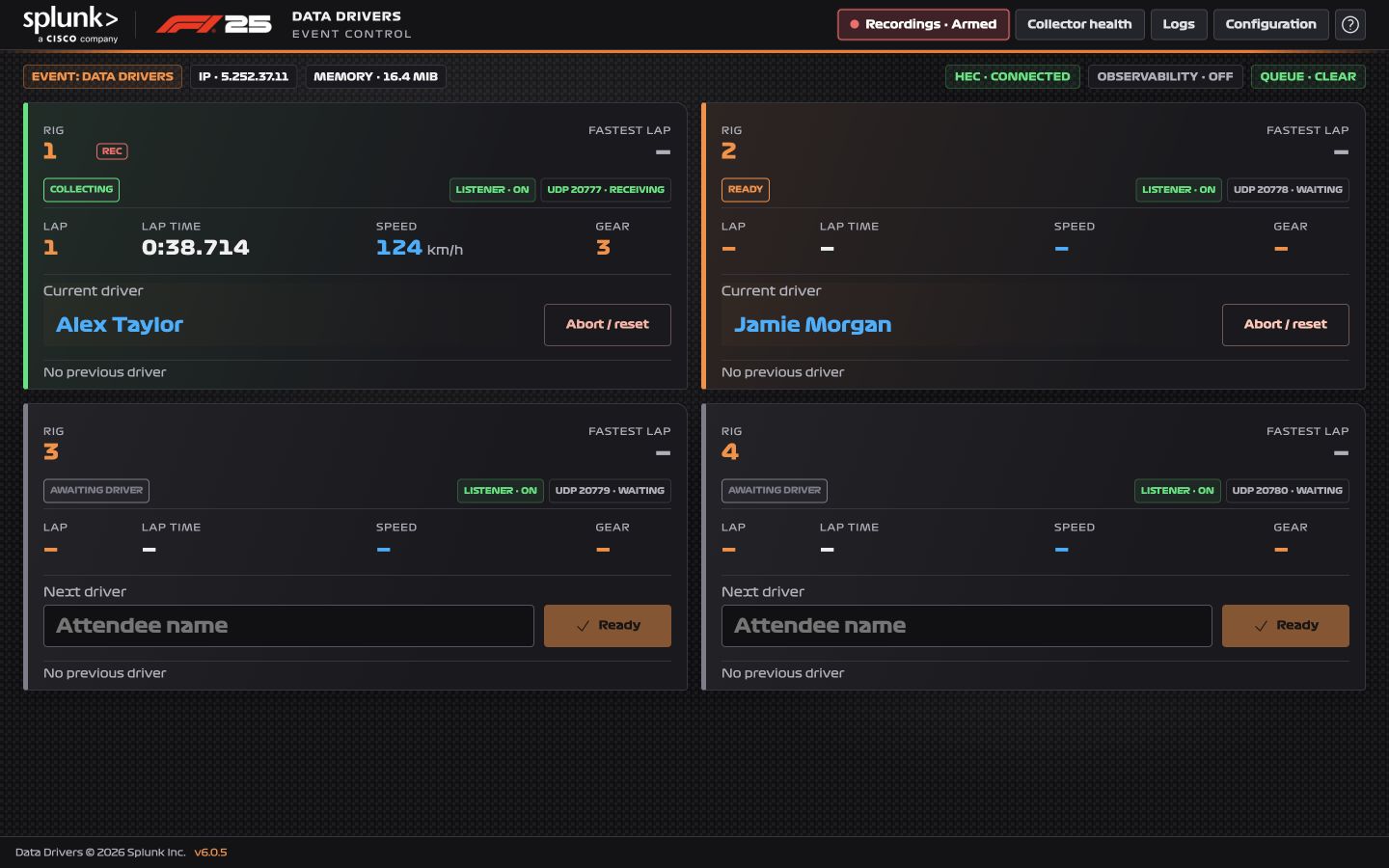
Only the attendee’s car is exported during the race window: Ready → first starting light (STLG 1) → Final Classification. Session Ended (SEND) means wait for the result; it does not complete the heat. Unsent data stays in a disk queue until delivered.
Choose your setup
- Open
http://<your-show-host>.splunk.show:81and confirm the footer shows v6. - Check Configuration → Event and Rigs.
- Keep provisioned HEC settings unless your administrator directs otherwise. Add your Observability realm/token if needed.
- Save changes and test each saved destination.
- Configure each game’s UDP address and unique rig port.
- Enter a driver name and select Ready before starting the race.
Event workflow
Prepare 27 three-lap Grands Prix in the game. For each attendee, enter their name on the correct rig, select Ready, then ask them to start. Capture starts at the first light. After SEND, leave the game running until Final Classification arrives and the result is saved. The card then opens for the next driver. Rigs progress independently.
The container starts listeners automatically; v6 has no Master Control switch. The optional global Record all rigs switch saves raw files independently of sending data to Splunk. Per-rig playback runs once at normal speed.
Test before guests arrive
Run a full three-lap race on each rig, including the results screen, and verify both destination dashboards. Check queue recovery after an interruption. Empty both queues and export wanted recordings before terminating a disposable host.
Next steps
Deployment and automation
Use the Docker instructions for persistent storage and the HEC update API for provisioning. See Display Screens for spectator dashboards.