ITSI Create Custom NEAP
10 minutes Authors Chris Putnam, Sam Scudere-Weiss, & Tim HardExercise: Create a Custom NEAP
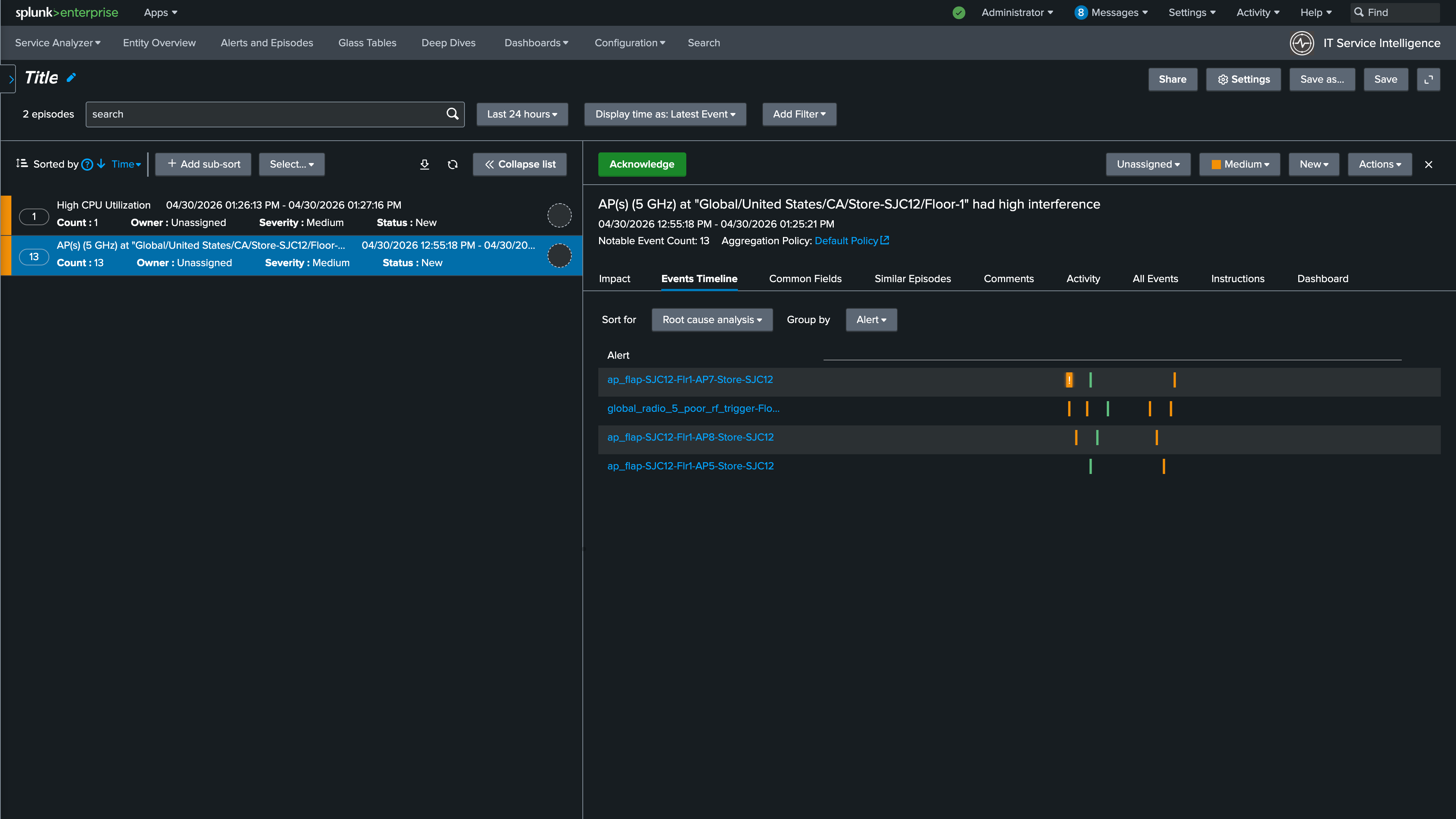
1. Navigate to Alerts and Episodes. Review any recently created episodes. Notice that they are using the Default Aggregation Policy to group the alerts. As the break scenario in this environment is on a 30 minute cycle (15 minutes healthy, 15 minutes unhealthy), it may take up to 15 minutes before you see episodes.
Info
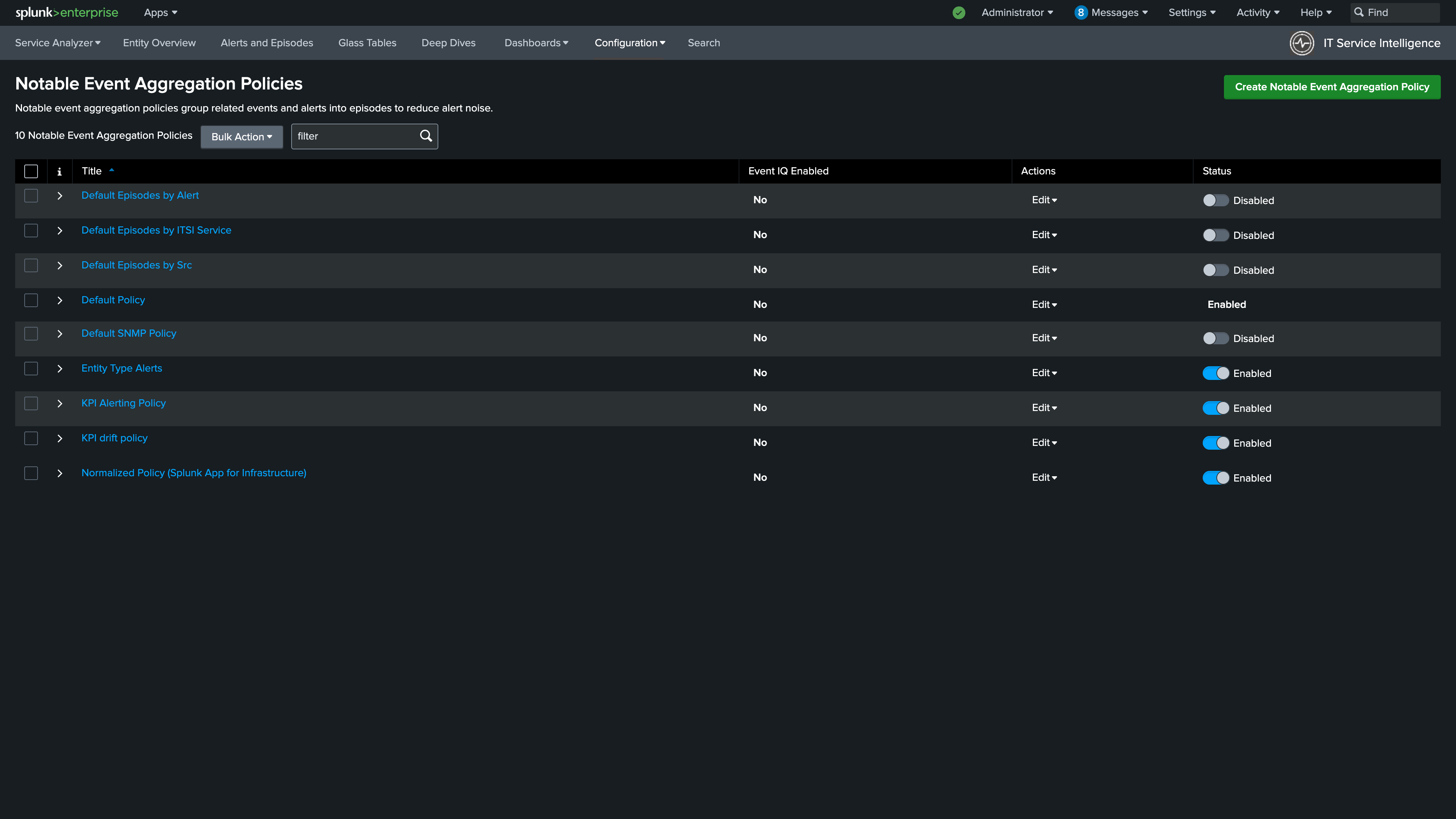
2. Navigate to Configuration > Event Management > Notable Event Aggregation Policies.
3. Click Create Notable Event Aggregation Policy in the upper right corner.
Info
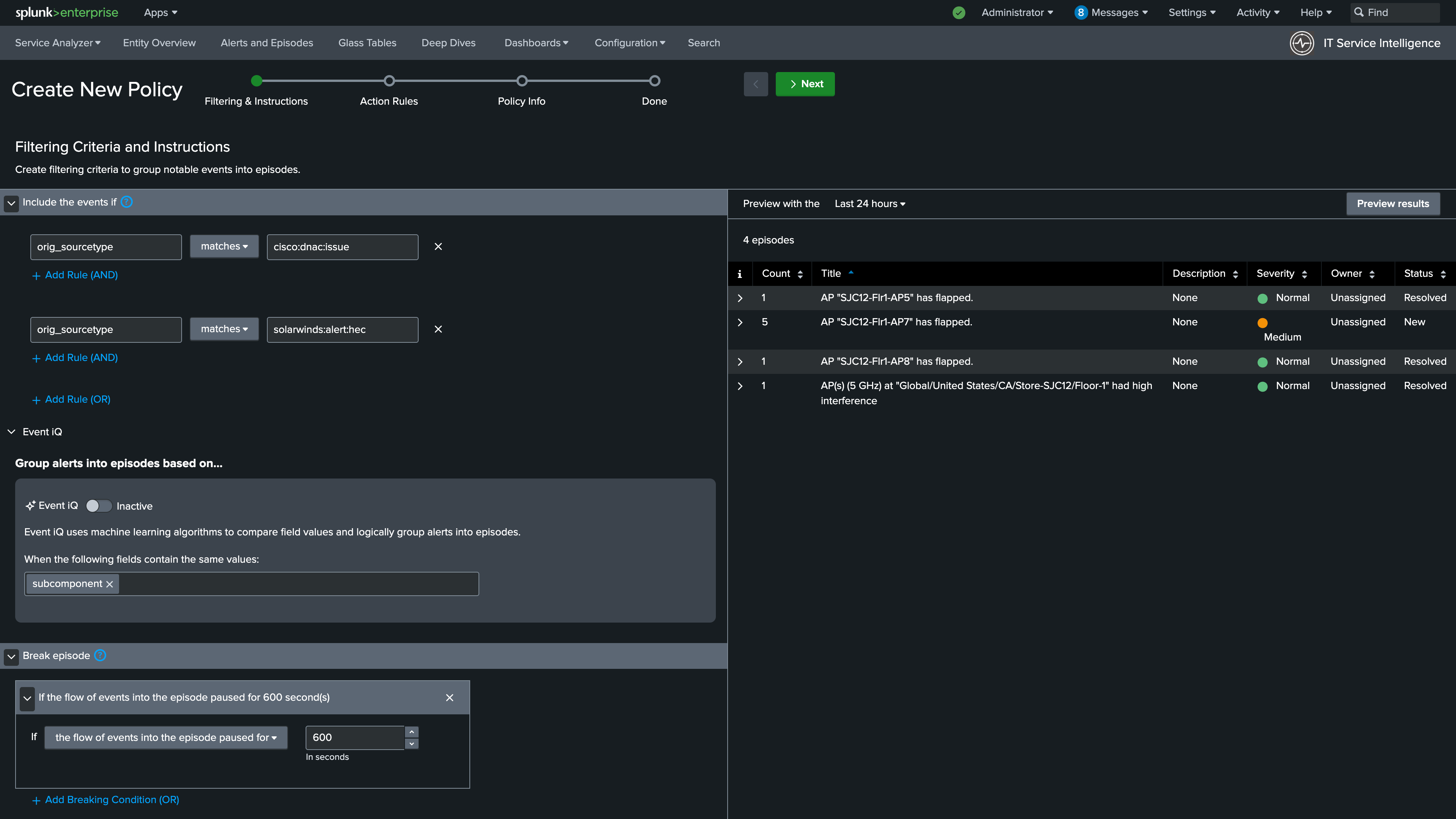
4. In the Filtering Criteria and Instructions add orig_sourcetype matches cisco:dnac:issue.
5. Click Add Rule (OR) and enter orig_sourcetype matches solarwinds:alert:hec.
6. In the Group alerts episodes based on… replace host with subcomponent.
7. Replace the default Break Episode stanza with If the flow of events into the episode is paused for and use 600 seconds.
Info
When the breaking criteria are met, the current episode can no longer have any events added to it and a new episode starts with the next notable event. For example: Break episode if the following event occurs: message matches status Normal. This rule breaks an episode once it receives a normal notable event, indicating the problem is resolved.
Info
Info
Event iQ in IT Service Intelligence (ITSI) uses machine learning algorithms to compare field values and correlate notable events into episodes. Instead of defining manual attributes to correlate events, you can automatically identify the correct attributes to use in your grouping policies. After you onboard alerts to ITSI, you can set criteria to filter alerts, and use Event iQ to create your event correlation policies based on an analysis of historical event data.
Using Event iQ in your workflow helps you quickly set up automated alert monitoring, reduce alert noise, and execute event actions. Additionally, algorithms can be continuously tuned to fit your environment’s alerting needs.
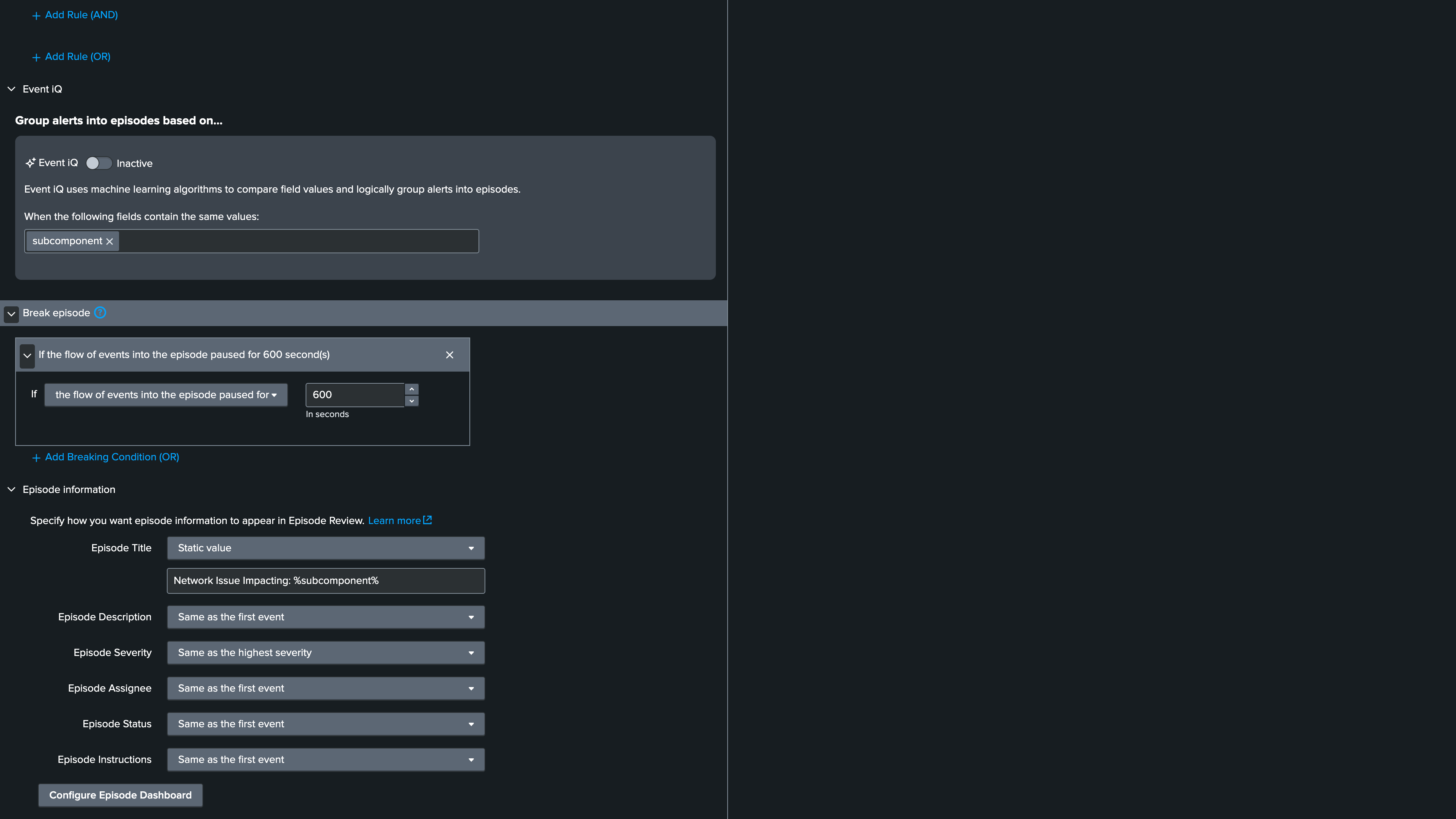
8. Expand Episode Information.
- Set Episode Title to Static Value and enter
Network Issue Impacting: %subcomponent% - Set Episode Severity to Same as the highest Severity
- Click Next in the upper right
Info
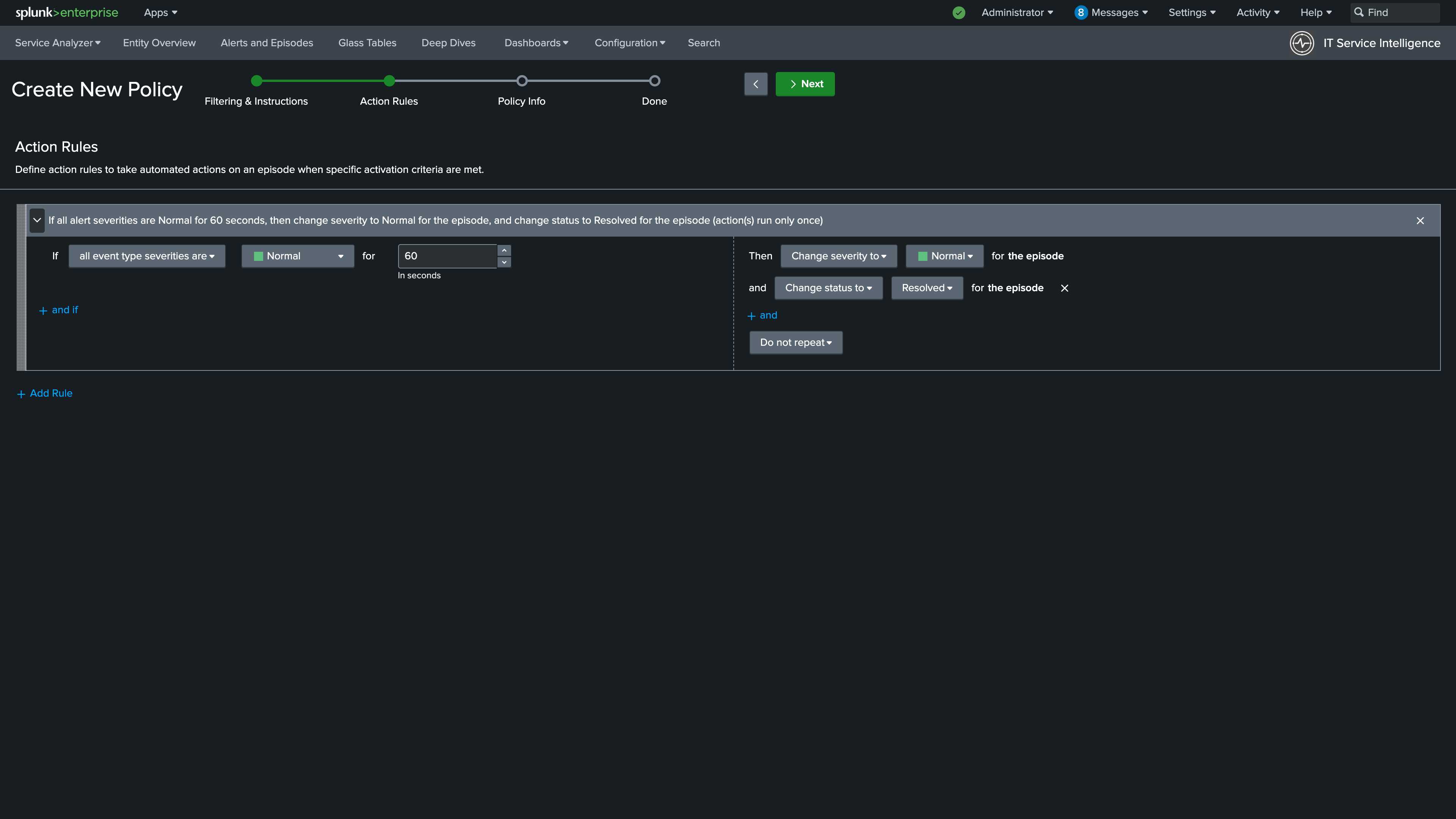
9. Configure the Action Rules.
Info
Set up action rules within an aggregation policy to take automated actions when an episode’s activation criteria are met. Action rules are optional and you can define more than one per aggregation policy.
- Add rule: If all event severities are choose Normal from the dropdown and enter 60 seconds
- Then Change severity to choose Normal from the dropdown and select Change status to > Resolved
- Click Next
Info
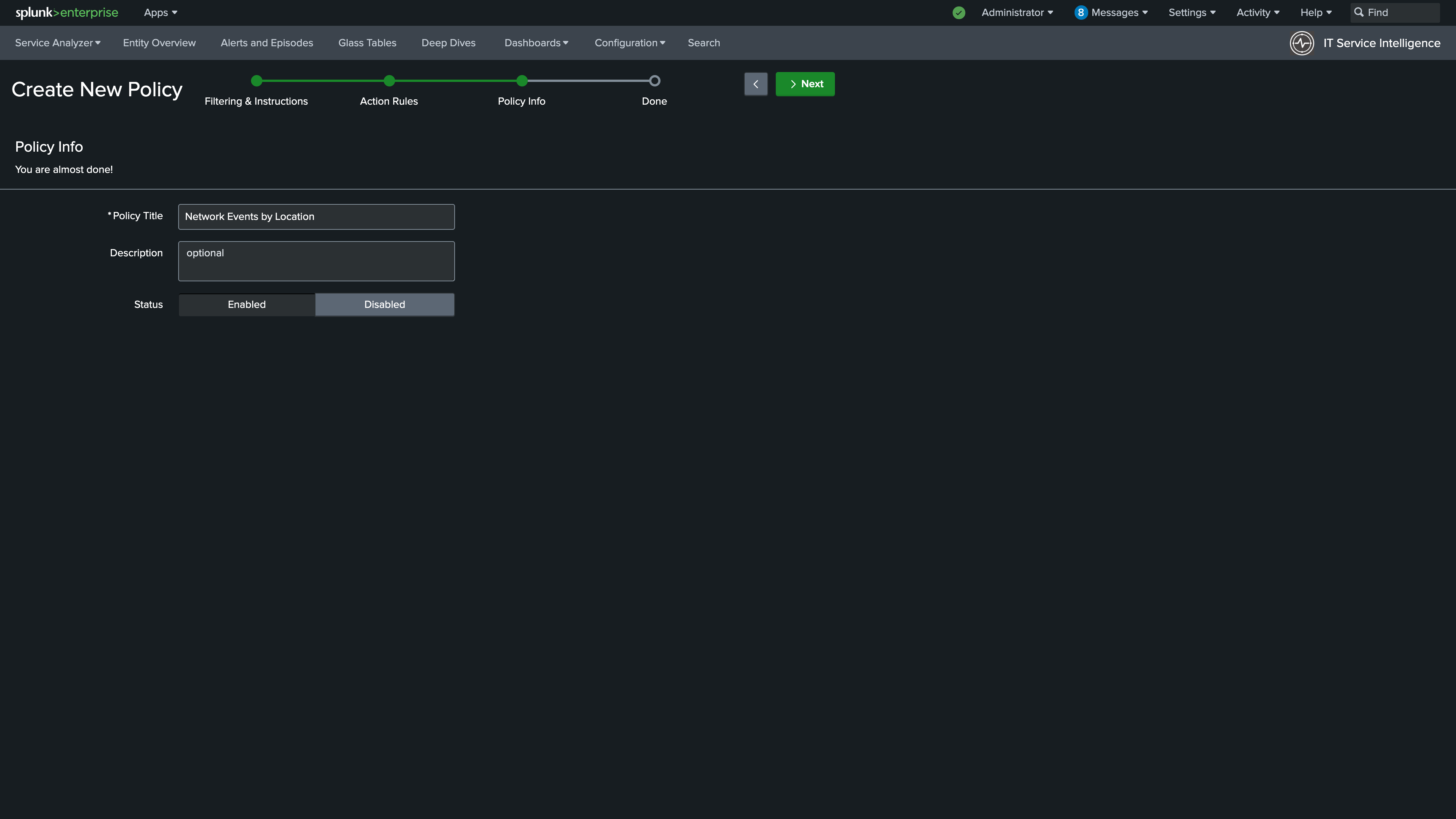
10. Enter Network Events by Location for the Policy Title. Click Enabled for the Status. Click Next.
Info
Nice Job!
Continue to the next section to validate the full end-to-end configuration.