

Application Security
Eliminating Risk & Tech-Debt
Why Queue Hygiene Matters #
Unmanaged vulnerability backlogs create risk, noise, stale detections, and confirmed work items. Teams spend remediation capacity on some CVSS resolutions while long-tail legacy library sprawl accumulates tech debt.
“Having governance of vulnerability status transitions and org-wide library inventory, turns an overwhelming list into an actionable, trackable queue - eliminating debt in the triage and resolution process.”
Organization-Wide Library Inventory #
Exercise
- Navigate to APM → Application Security → Libraries.
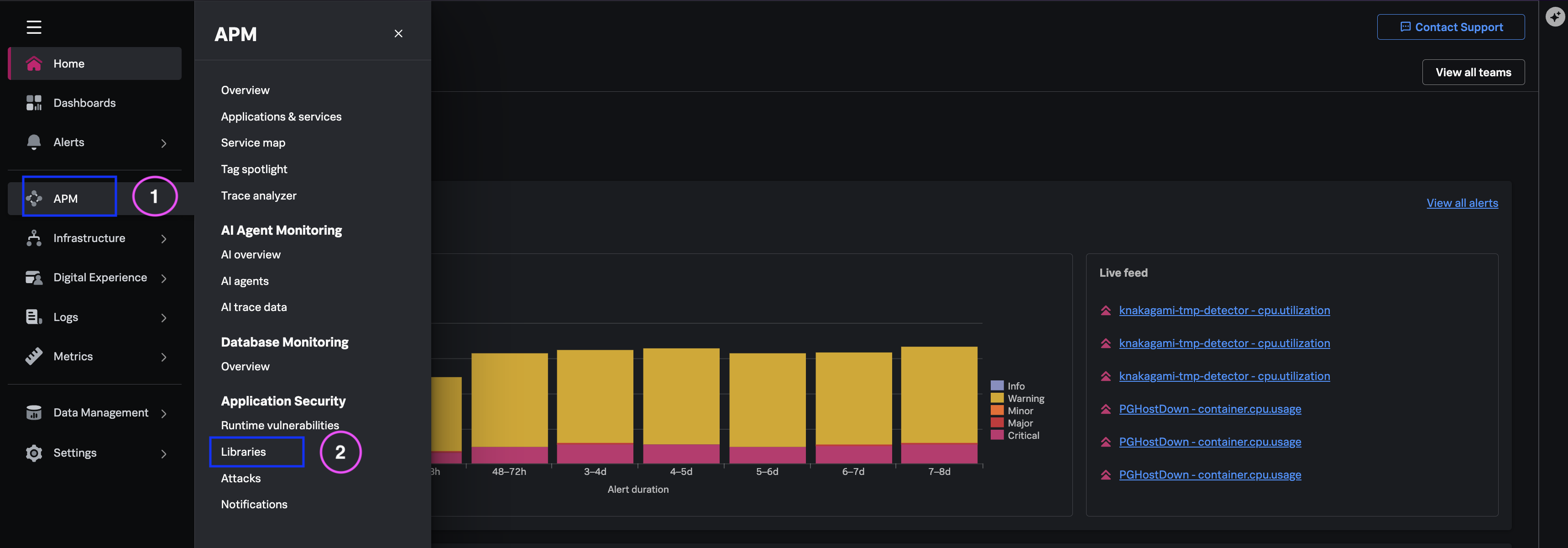
- Here, you will have a comprehensive catalog of all packages deployed across the instrumented application environments.
- Observe libraries for vulnerability posture, CVSS, EPSS Risk Score, services and recommendations.
- You can filter the applications by Library Type - This will highlight the various languages insrumented within your enevironment.
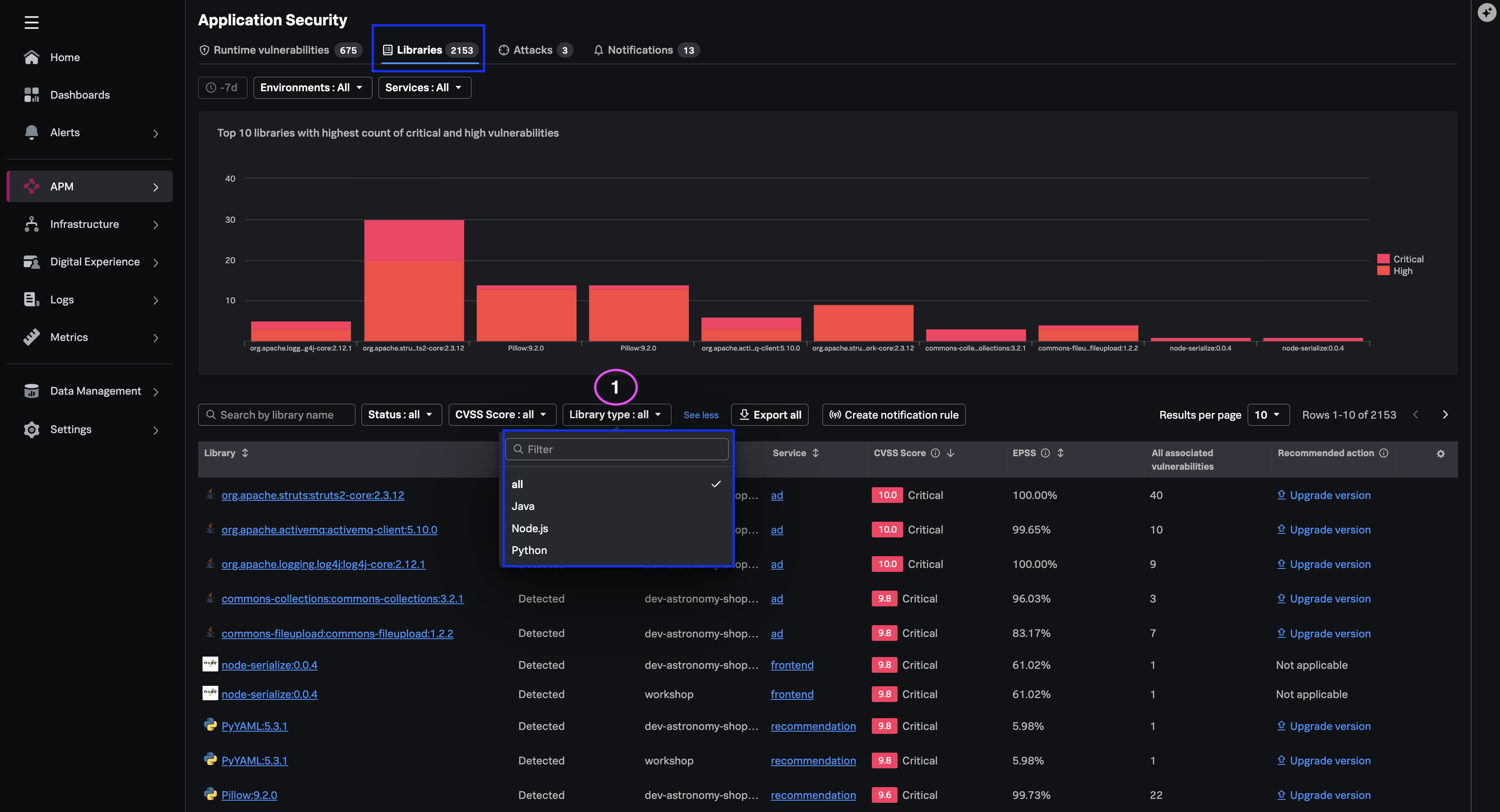
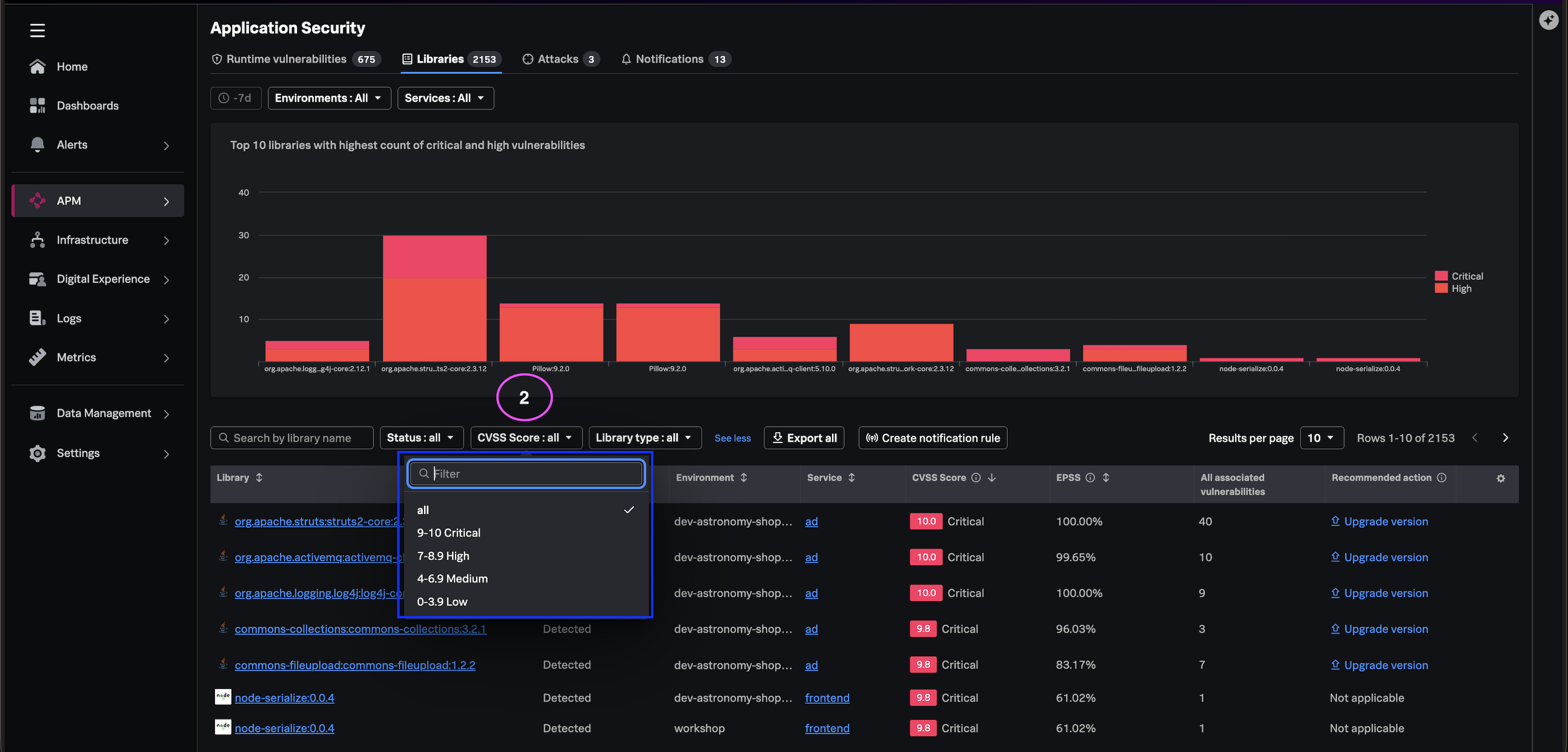
“This gives you the complete picture of what is running in your environment, who owns it and the risk level. It is also a useful view of legacy | unused libraries that still exist within your code-base that may need to be retired”
Vulnerability Status Lifecycle Management #
Exercise
- Navigate to APM → Application Security → Runtime Vulnerabilities.
- Review vulnerabilities against your organization’s risk policies i.e risk assessment guidelines.
- Select one vulnerability with current status of ‘Detected’ using the row checkmark.
- Click Update Status and choose Ignored or Confirmed.
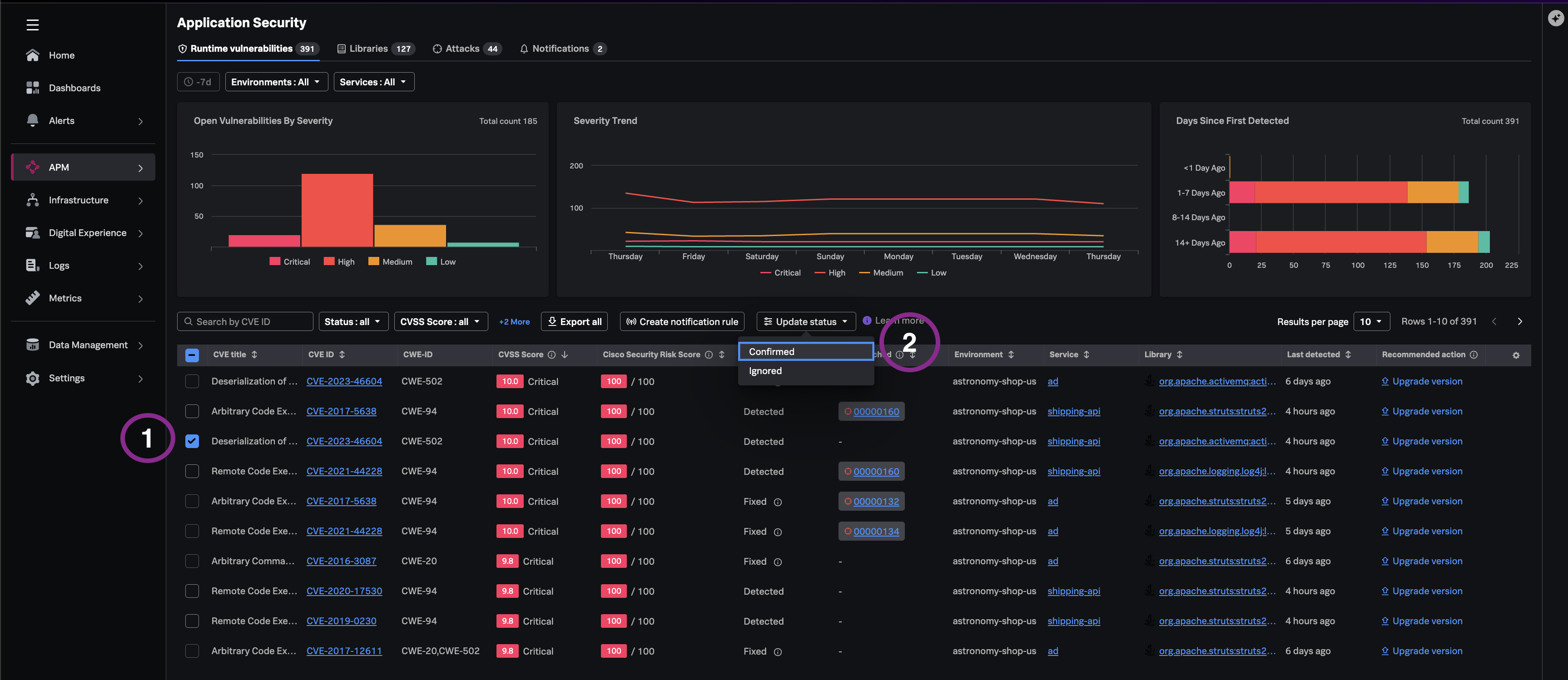
“This helps qualify noise and calibrated low risk vulnerabilities versus confirmed work items that require attention - with audit-friendly state transitions.”
Filter and Export for Collaboration #
Exercise
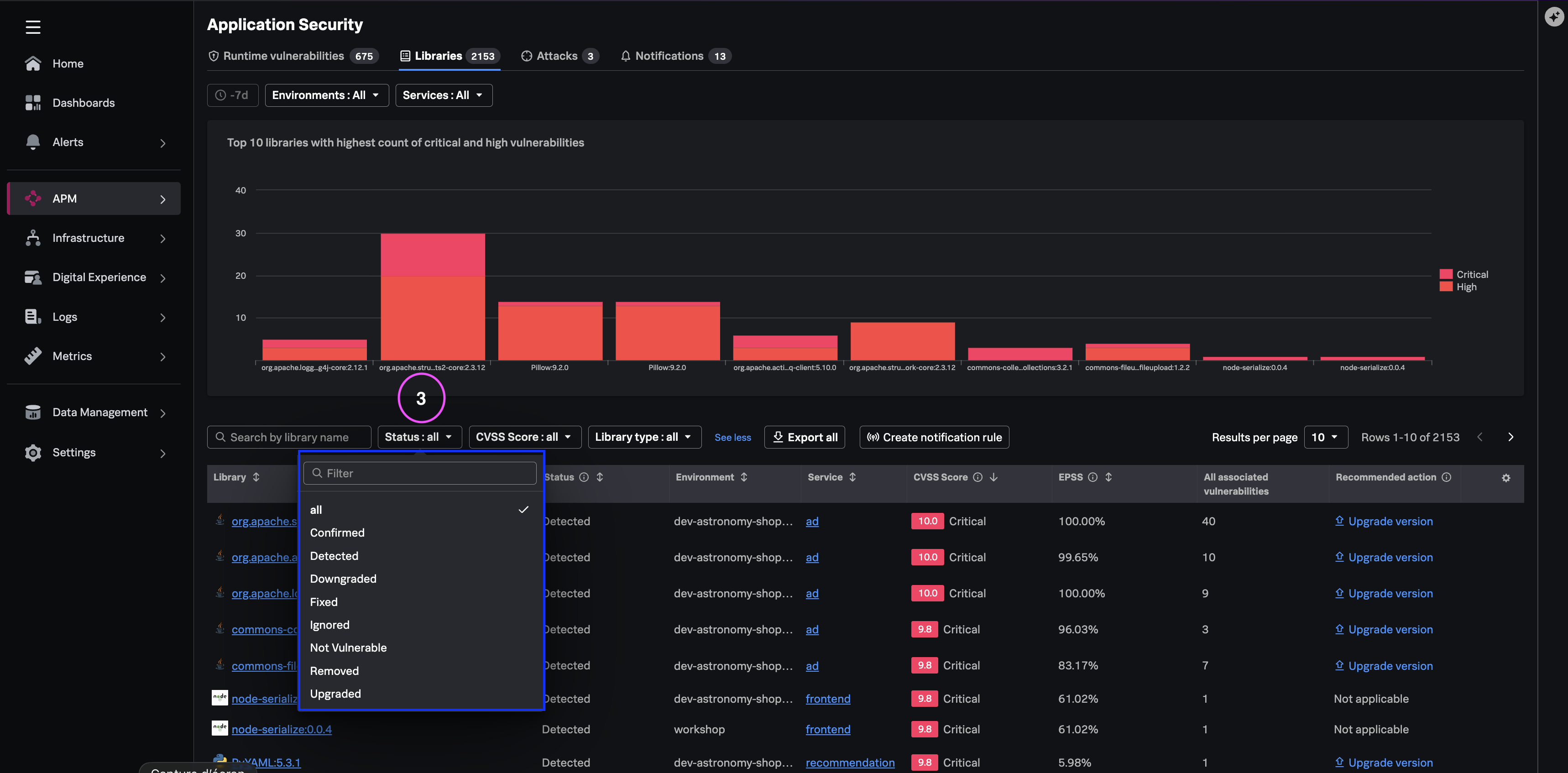
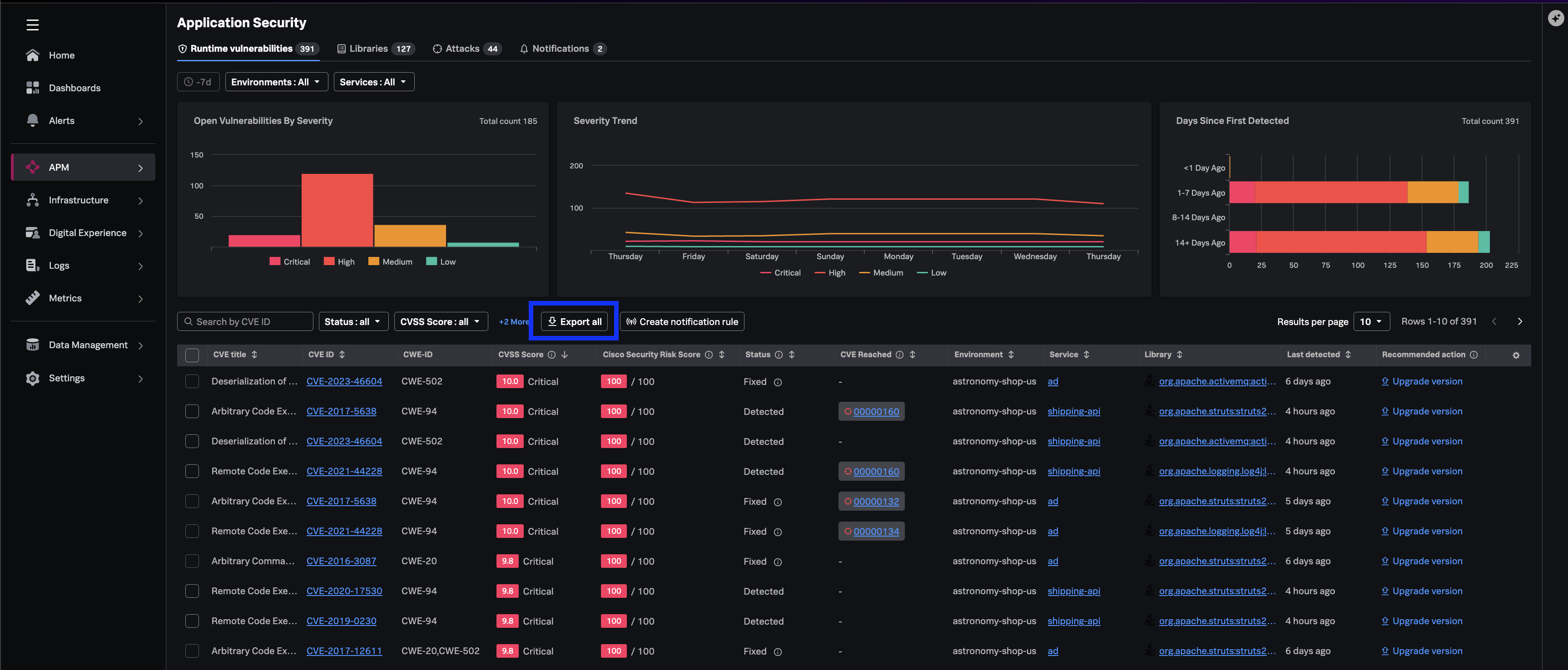
- Open the Status dropdown and select Not Vulnerable.
- Observe which libraries may show no known CVE data, which means that they are healthy relative to known and existing risk.
- Select Export (or equivalent) to produce a shareable subset for a mock engineering or SecOps handoff.
Note
Zero Day Vulnerabilities across all your active workloadsWhat you learned #
- How bulk status updates govern vulnerability queue debt.
- How org-wide library inventory exposes supply-chain hygiene beyond a single CVE.
- How filters and export support cross-team collaboration without duplicate workflows.